

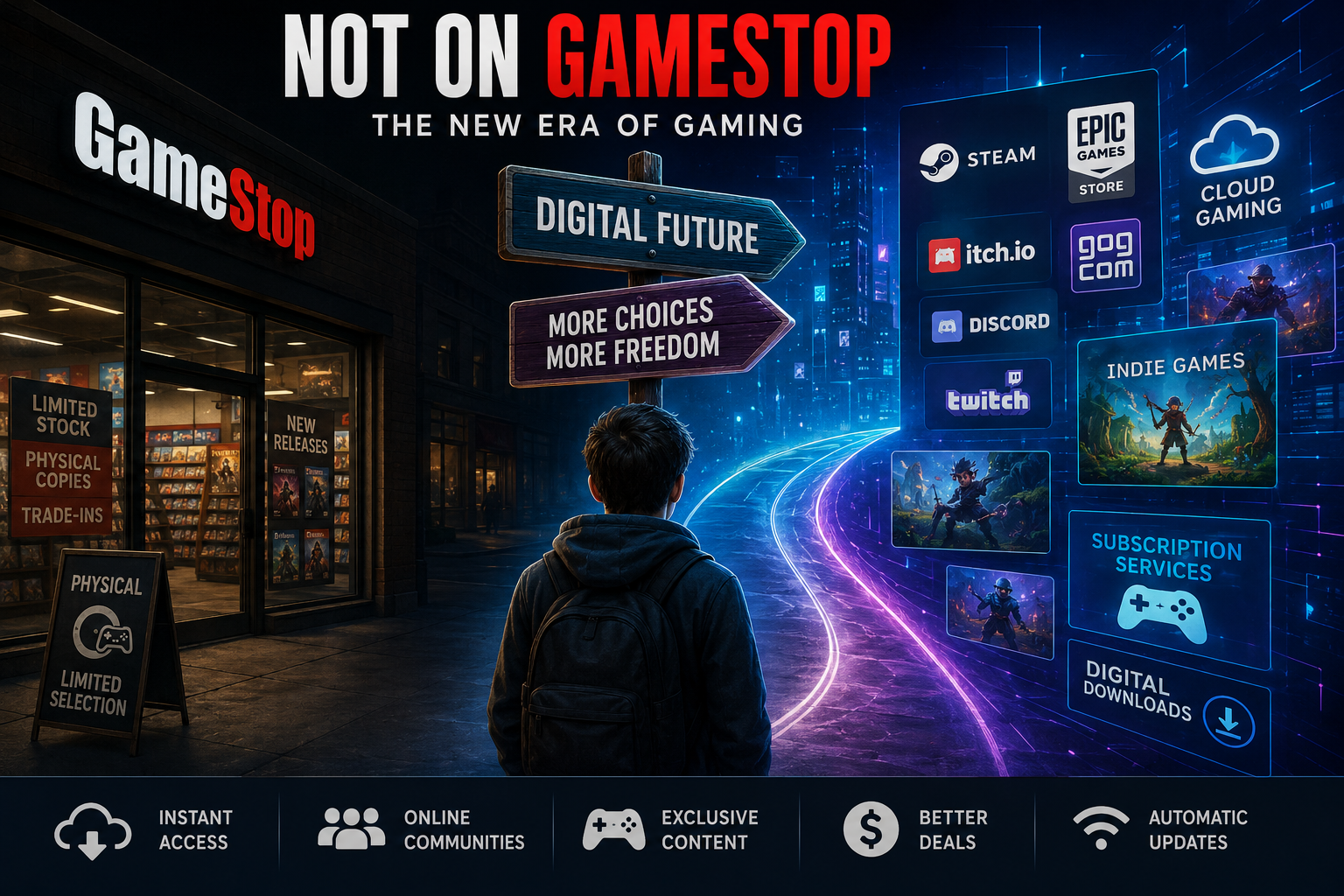
The gaming industry has changed dramatically over the past decade. Once upon a time, physical stores were the heart of gaming culture. Players lined up outside stores for midnight launches, traded used discs, and searched shelves for the latest console titles. Among these retailers, GameStop became one of the most recognizable names in gaming history.
Today, however, a growing number of players are searching for experiences, games, products, and communities that are simply “Not on GameStop.” This phrase has become more than a literal statement. It now represents a shift in gamer behavior, digital ownership, indie creativity, and the rise of alternative gaming ecosystems.
From digital-only releases to independent marketplaces and subscription services, modern gamers are no longer limited to one retailer or platform. The phrase “Not on GameStop” reflects this new era of gaming freedom.
The Changing Role of Game Retailers
For years, physical gaming stores dominated the market. Players relied on retail chains to purchase consoles, accessories, and boxed games. Used game trading was especially popular because it allowed gamers to exchange completed titles for store credit.
However, technology transformed how games are distributed. High-speed internet connections made digital downloads faster and more convenient. Console manufacturers began offering online stores directly through their systems. PC gamers increasingly turned toward platforms like Steam and Epic Games to access massive digital libraries instantly.
As a result, many popular titles, indie games, and experimental releases became unavailable in traditional retail stores. Gamers began noticing that some of the most exciting gaming experiences were simply not on GameStop.
The Rise of Digital Gaming
Digital gaming changed consumer habits in ways few people predicted. Players no longer needed to travel to a store, wait for shipping, or worry about stock availability. Games could be downloaded instantly from home.
This convenience created an entirely new gaming culture. Digital platforms now offer:
- Instant game downloads
- Automatic updates
- Cloud saves
- Online multiplayer access
- Subscription libraries
- Early-access releases
Because of these advantages, many developers choose digital distribution instead of physical retail partnerships. Smaller studios especially benefit because they avoid manufacturing costs and retail limitations.
Consequently, gamers searching for niche titles often discover that their favorite games are not available in physical stores at all.
Indie Developers and Creative Freedom
One of the biggest reasons behind the “Not on GameStop” trend is the explosion of indie gaming. Independent developers now have tools to create and distribute games without major publishers.
Indie studios frequently launch titles through digital marketplaces because it gives them creative control and better profit margins. Many award-winning games started as independent digital releases before gaining worldwide recognition.
Games like Hades, Stardew Valley, and Undertale demonstrated that smaller teams could compete with massive publishers.
These games succeeded because players wanted fresh storytelling, artistic creativity, and unique gameplay mechanics. In many cases, their initial success came entirely outside traditional retail channels.
The phrase “Not on GameStop” therefore also symbolizes innovation beyond mainstream gaming shelves.
Subscription Services Are Changing Ownership
Gaming subscriptions are reshaping how people access entertainment. Instead of buying individual games, many players now pay monthly fees for large gaming libraries.
Services such as Xbox Game Pass and PlayStation Plus allow gamers to download and play hundreds of titles instantly.
This model reduces the importance of physical copies. Players no longer feel the need to visit stores when new games are already included in their subscriptions.
The success of subscription gaming has also encouraged developers to prioritize digital ecosystems over retail sales. As more consumers embrace streaming and cloud gaming, the phrase “Not on GameStop” continues to gain relevance.
PC Gaming and Alternative Marketplaces
PC gaming has always operated differently from console gaming. Unlike console ecosystems tied to physical retailers, PC gamers rely heavily on online marketplaces.
Platforms such as GOG.com, itch.io, and Steam give developers freedom to publish directly to audiences.
This direct relationship between creators and players has allowed experimental games, fan projects, and niche genres to flourish. Horror games, simulation titles, retro-inspired projects, and narrative experiences often find loyal communities online long before mainstream attention arrives.
Many of these projects never appear in traditional retail stores, further reinforcing the concept of gaming experiences existing outside physical retail chains.
Gaming Communities Beyond Retail
Modern gaming culture is deeply connected to online communities. Platforms like Discord, Reddit, and Twitch have become central hubs for discussion, streaming, and game discovery.
Players no longer rely on store employees or gaming magazines for recommendations. Instead, they follow streamers, YouTubers, and online creators who introduce hidden gems and independent titles.
A single viral gameplay clip can turn an unknown game into a global phenomenon overnight. This social-driven discovery model reduces the influence of traditional retail marketing.
As gaming communities become more decentralized, players naturally explore experiences that are not tied to major retailers.
Collectors Still Value Physical Games
Although digital gaming dominates many markets, physical collecting remains important. Some gamers still prefer boxed editions, steelbooks, art books, and limited collector releases.
However, collectors have increasingly shifted toward specialty retailers, publisher-exclusive editions, and online collector communities rather than relying solely on major retail stores.
Limited-run companies now produce physical versions of indie games that were originally launched digitally. This creates a new hybrid model where games can exist digitally first and physically later.
For collectors, “Not on GameStop” does not necessarily mean unavailable forever. Instead, it may indicate a different distribution path designed for dedicated fans.
The Impact of Cloud Gaming
Cloud gaming could further reduce dependence on physical retail. Services such as NVIDIA GeForce NOW and Xbox Cloud Gaming allow users to stream games without expensive hardware.
This technology changes the idea of ownership entirely. Players may eventually access games from any device without downloading or purchasing physical copies.
As internet infrastructure improves worldwide, cloud gaming may become even more common. If that happens, traditional gaming stores could become less central to the gaming experience.
The future of gaming may revolve around access rather than ownership.
Why Gamers Search for “Not on GameStop”
People search for this phrase for several reasons. Some gamers want exclusive digital titles. Others seek rare collectibles, indie experiences, or alternative marketplaces.
In many cases, the phrase reflects curiosity about products or games unavailable through mainstream retail. It also suggests that players are becoming more aware of the broader gaming ecosystem beyond physical shelves.
Gamers today value flexibility. They want multiple purchasing options, direct developer support, and access to unique experiences that may never appear in chain stores.
This shift is not necessarily anti-retail. Instead, it represents the diversification of the gaming industry.
The Future of Gaming Distribution
The gaming world is evolving faster than ever. Artificial intelligence, virtual reality, cloud infrastructure, and digital marketplaces continue transforming how games are created and distributed.
Physical retailers still hold value, especially for collectors and console launches. Yet the industry is clearly moving toward digital-first ecosystems.
Developers now have more independence. Gamers have more choices. Communities have more influence. As a result, the phrase “Not on GameStop” has become a reflection of modern gaming itself — decentralized, digital, creative, and constantly expanding.
Rather than depending on a single retailer, players now explore countless platforms, services, and communities to discover the experiences they truly enjoy.
Conclusion
“Not on GameStop” is more than a search phrase. It represents the changing nature of gaming culture in the digital age. From indie developers and subscription services to cloud gaming and online communities, the industry has expanded far beyond traditional retail stores.
Modern gamers are no longer limited by shelf space or physical inventory. They can access games instantly, support independent creators, and explore entirely new forms of interactive entertainment.
As gaming technology continues to evolve, the importance of alternative platforms and digital ecosystems will only grow stronger. Whether through streaming services, indie marketplaces, or online communities, the future of gaming increasingly exists beyond the walls of traditional retail.
