

The shift from fuel-based travel to electric mobility in everyday life
Transportation is no longer just about moving from one place to another; it reflects lifestyle, cost choices, and environmental awareness. In many cities, Electric Scooters vs Petrol Bikes are slowly replacing traditional petrol bikes for daily commuting, while petrol bikes still maintain a strong presence due to their power and long-standing reliability. This growing shift has created a clear comparison between modern electric mobility and conventional fuel-powered transport.
Everyday commuting needs shaping vehicle choices in modern cities
Most riders today do not use two-wheelers for long adventures but for routine travel such as office commutes, college trips, and short urban rides. Electric scooters fit naturally into this lifestyle because they are easy to handle in traffic, require minimal effort, and are ideal for short to medium distances. Petrol bikes, however, still appeal to those who travel longer routes or need a vehicle that performs consistently across different terrains.
Money spent on daily travel and long-term ownership impact
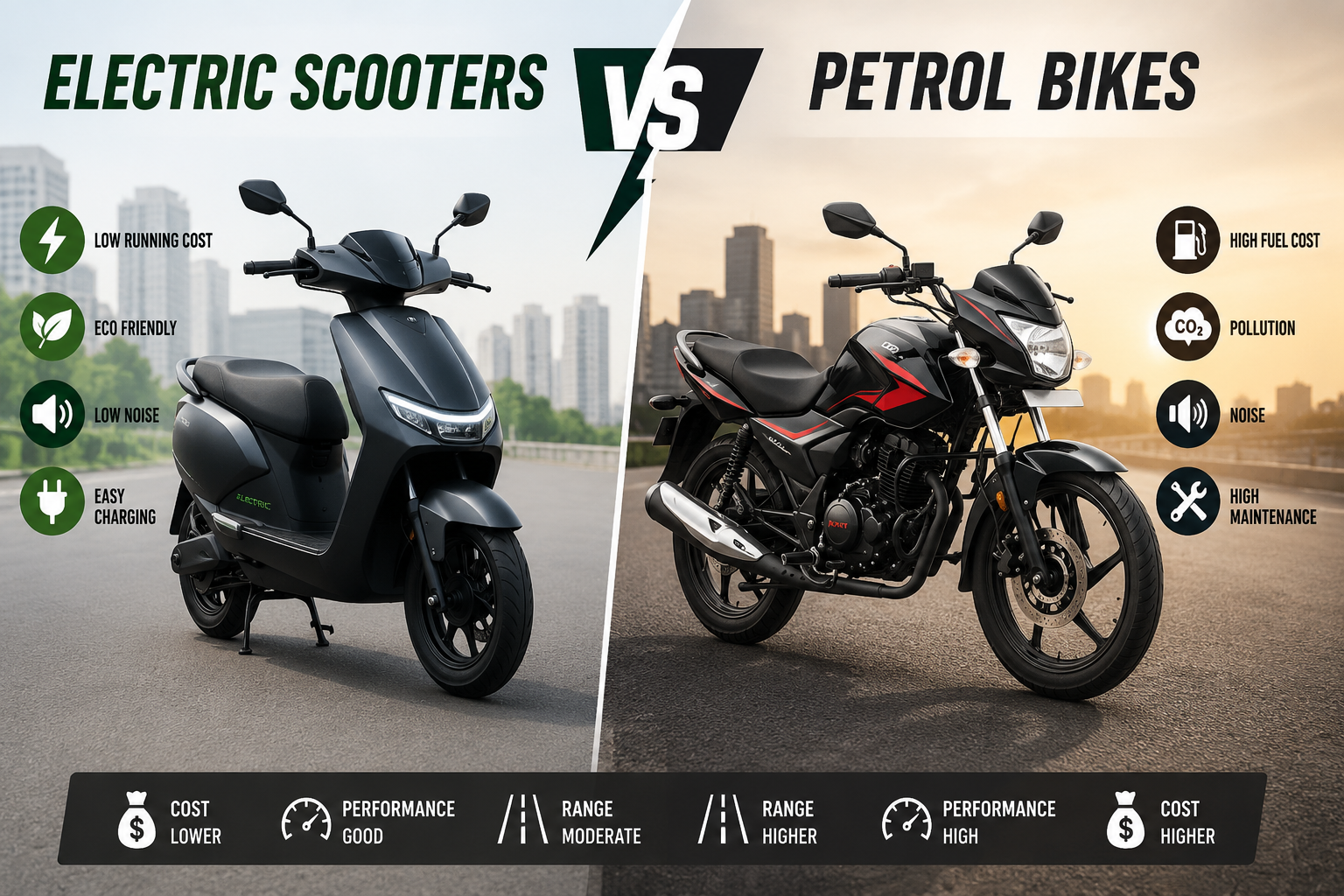
One of the most noticeable differences between Electric Scooters vs Petrol Bikes is the overall cost of ownership. Electric scooters require electricity for charging, which is significantly cheaper compared to fuel expenses. Over time, this creates noticeable savings for daily riders.
Petrol bikes, on the other hand, depend on fuel prices that often fluctuate. This makes long-term budgeting harder for regular commuters. However, petrol bikes usually come with a lower starting price in many markets, which attracts buyers with limited upfront budgets.
Maintenance demands shaping long-term convenience
Electric scooters are built with fewer mechanical components, which means fewer chances of breakdowns or frequent servicing. There is no need for engine oil changes, clutch adjustments, or exhaust maintenance. This simplicity reduces both cost and effort for owners.
Petrol bikes require regular maintenance to keep the engine in good condition. Routine servicing, oil replacement, and mechanical tuning are necessary for smooth performance. While these bikes are durable, their upkeep demands more attention over time.
Energy sources influencing environmental responsibility
Environmental concerns have become a major factor in transportation decisions. Electric scooters produce no direct emissions during use, making them a cleaner option for reducing urban air pollution. They contribute to quieter and more eco-friendly cities.
Petrol bikes release carbon emissions and other pollutants during operation. While modern engines are becoming more efficient, they still depend on fossil fuels. As awareness of climate change increases, many riders are considering electric alternatives for a greener lifestyle.
Riding comfort and experience in real-world traffic conditions
Electric scooters offer a smooth and silent riding experience. The instant torque delivery makes them responsive in stop-and-go traffic, which is common in busy urban environments. Riders often find them easier to control, especially beginners or younger users.
Petrol bikes provide a more traditional riding experience with engine sound, gear shifting, and stronger acceleration at higher speeds. Many experienced riders prefer this feel, especially on open roads where performance matters more than simplicity.
Distance coverage and travel flexibility on different road conditions
Range and refueling convenience play a major role in choosing between these two vehicles. Electric scooters are best suited for short daily commutes and urban travel. Their range depends on battery capacity, and charging infrastructure may not always be widely available in every area.
Petrol bikes offer greater flexibility for long-distance travel. Fuel stations are easily accessible, and refueling takes only a few minutes. This makes petrol bikes more practical for highway journeys and rural travel where charging points may be limited.
Charging convenience versus instant refueling reality
Electric scooters can be charged at home, which is a major advantage for daily users. Plugging in overnight ensures the vehicle is ready for the next day. However, charging time is still longer compared to refueling.
Petrol bikes can be refueled quickly at any fuel station, making them more suitable for emergency or spontaneous travel. This speed and availability still give petrol bikes an advantage in terms of convenience.
Technology features shaping modern two-wheeler experience
Electric scooters often come with advanced digital features such as mobile connectivity, GPS tracking, ride statistics, and smart locking systems. These features appeal to tech-savvy users who prefer integrated smart mobility solutions.
Petrol bikes are also evolving with digital displays and fuel efficiency indicators, but their core design remains mechanical. The focus is more on engine performance rather than digital innovation.
Safety considerations and control in different riding environments
Both Electric Scooters vs Petrol Bikes offer safe riding when used properly, but their behavior on the road differs. Electric scooters usually have lower top speeds, making them safer for beginners and city travel. Their smooth acceleration also reduces sudden jerks.
Petrol bikes, especially high-performance models, require more skill and control due to higher speeds and stronger engines. They are better suited for experienced riders who understand road dynamics.
Urban traffic handling and parking convenience in crowded areas
City traffic demands compact, efficient vehicles. Electric scooters excel in this environment because they are lightweight, easy to maneuver, and simple to park in tight spaces. This makes them highly practical for crowded urban centers.
Petrol bikes also perform well in traffic, but their slightly heavier structure and engine heat can make long waiting periods less comfortable compared to electric alternatives.
Long-term durability and evolving technology reliability
Petrol bikes have been refined over decades, making them highly reliable for long-term use. Their engines are built for endurance, and spare parts are widely available almost everywhere.
Electric scooters are improving rapidly, but battery life remains an important factor. Over time, battery performance may reduce, requiring replacement. However, continuous advancements in battery technology are improving their durability year by year.
Government support and the future direction of transportation
Many governments are encouraging electric mobility through subsidies, tax benefits, and infrastructure development. Charging stations are increasing in urban areas, signaling a shift toward cleaner transport systems.
Petrol bikes are still widely supported due to existing infrastructure, but stricter emission regulations are gradually pushing the market toward electric alternatives.
Lifestyle influence behind choosing electric or petrol-powered rides
The decision between Electric Scooters vs Petrol Bikes is not only technical but also personal. Some riders prefer simplicity, low cost, and eco-friendly travel, while others value power, speed, and long-distance freedom.
Urban lifestyles often favor electric scooters because they match short-distance, daily commuting patterns. In contrast, rural and highway riders still depend heavily on petrol bikes.
Real-world practicality shaping everyday transportation decisions
In real usage, the choice often comes down to routine. If daily travel is within a city and charging is convenient, electric scooters offer a more economical and stress-free experience. If travel involves long distances, unpredictable routes, or limited charging access, petrol bikes remain more dependable.
Future outlook of Electric Scooters vs Petrol Bikes on the road
The future of two-wheel transportation is gradually shifting toward electrification. As battery technology improves and charging networks expand, electric scooters are expected to become even more common in cities.
However, petrol bikes will not disappear quickly. They will continue to serve riders who need power, speed, and long-range capability. Both will likely coexist, serving different needs rather than replacing each other completely.
