
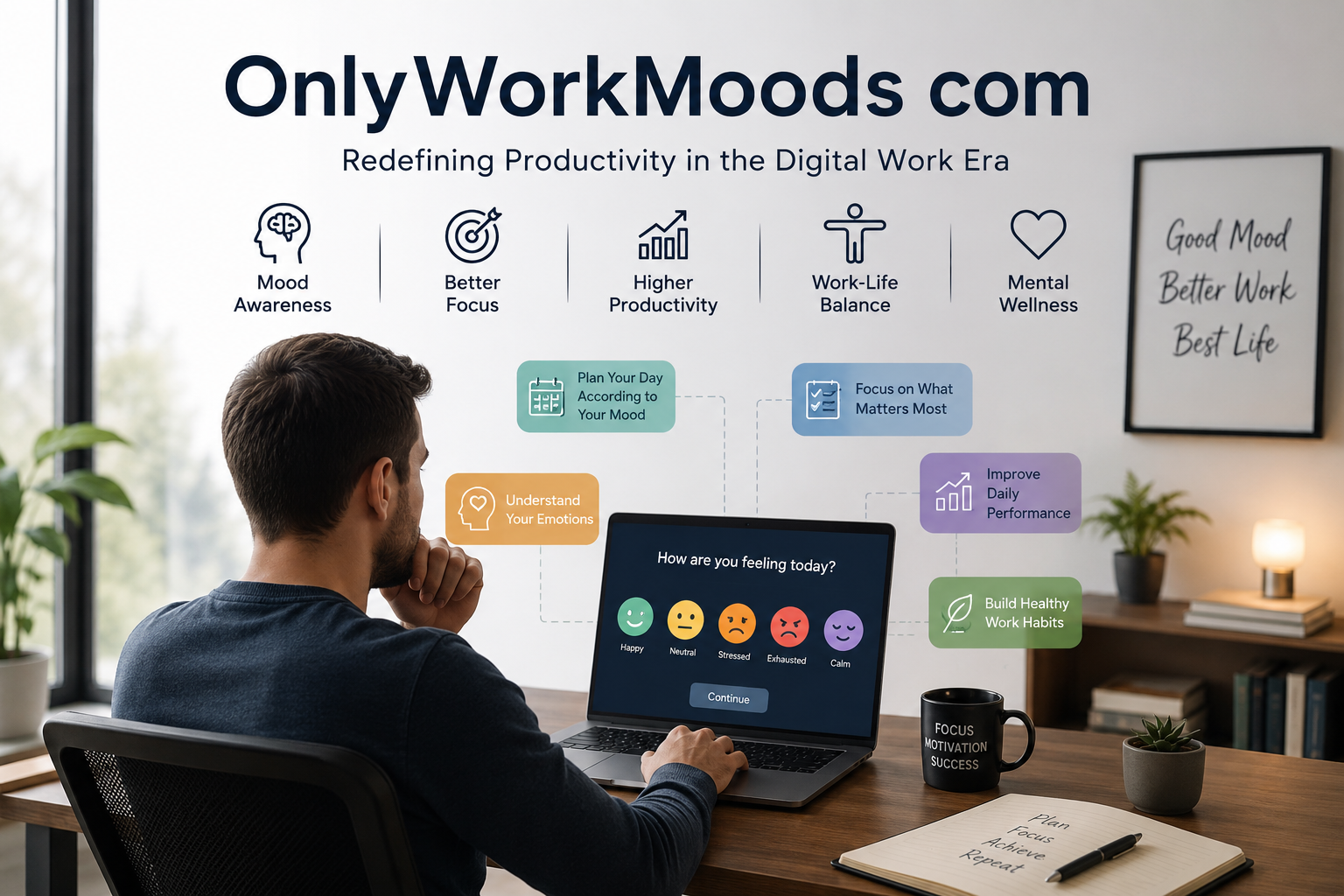
The modern workplace has changed dramatically over the last decade. Remote jobs, online businesses, freelance careers, and hybrid office systems have created a completely new professional environment. In this fast-moving digital world, people are no longer focused only on working harder. Instead, they are searching for smarter ways to stay productive while protecting their mental well-being and emotional balance. This growing trend has brought attention to concepts like OnlyWorkMoods com, which reflects the connection between mood, motivation, productivity, and digital work culture.
Today’s professionals understand that emotions play a major role in work performance. A person’s mental state can influence creativity, concentration, communication, and decision-making. Because of this, platforms and ideas centered around emotional awareness are becoming increasingly popular among remote workers, freelancers, entrepreneurs, and digital creators.
OnlyWorkMoods com represents this modern approach to work where productivity is connected not only to deadlines and schedules but also to personal comfort, motivation, and emotional energy. As digital workspaces continue evolving, mood-based productivity systems may become an important part of future professional culture.
The Evolution of Modern Digital Workspaces
Traditional workplaces were built around strict schedules and fixed office environments. Employees were expected to work within the same structure regardless of personal energy levels or emotional conditions. However, technological advancements and changing professional expectations have transformed this model completely.
Remote work and digital collaboration tools now allow individuals to work from almost anywhere in the world. This flexibility has encouraged people to create personalized work routines that better match their lifestyles and mental preferences. As a result, emotional well-being has become a central topic in discussions about productivity.
OnlyWorkMoods com reflects this shift by highlighting the importance of mood in professional performance. Rather than forcing workers into rigid systems, modern productivity culture focuses on adaptability, balance, and sustainable work habits.
The Growing Importance of Emotional Intelligence in Professional Life
Emotional intelligence is becoming one of the most valuable skills in modern careers. Professionals who understand their emotions often communicate better, manage stress more effectively, and maintain healthier work relationships.
Workplaces today are increasingly aware that emotional stability directly affects employee performance. Businesses now invest in wellness programs, flexible schedules, and mental health support because emotionally balanced workers tend to be more productive and creative.
OnlyWorkMoods com aligns with this movement by emphasizing the connection between emotional awareness and workplace success. The idea suggests that understanding personal moods can help individuals organize tasks more efficiently and maintain consistent motivation throughout the day.
How Mood Influences Productivity and Creativity
Human productivity is deeply connected to emotional energy. People rarely perform at the same level every hour of the day. Some moments encourage creativity and innovation, while others are better suited for analytical or repetitive tasks.
Positive moods often improve imagination, problem-solving abilities, and communication skills. On the other hand, stress and exhaustion can reduce focus and increase mental fatigue. Recognizing these patterns allows professionals to manage work more effectively.
OnlyWorkMoods com reflects this understanding by supporting the idea that productivity should adapt to emotional conditions rather than ignore them completely.
Creative professionals especially benefit from mood-aware work systems. Writers, designers, editors, marketers, and artists frequently rely on emotional energy to produce high-quality work. Flexible productivity methods allow them to maximize creative performance without unnecessary pressure.
The Rise of Remote Work and Flexible Career Structures
Remote work has become one of the defining trends of the modern economy. Millions of people now work from home, co-working spaces, or independent locations instead of traditional offices. This transformation has given workers greater control over their schedules and daily routines.
However, remote work also introduces new challenges. Without physical office structures, many people struggle with motivation, loneliness, burnout, and work-life balance. Mood-focused productivity systems aim to solve these issues by encouraging healthier and more personalized routines.
OnlyWorkMoods com represents the growing demand for flexible productivity models that support emotional well-being alongside professional performance.
Remote workers often prefer systems that allow them to organize tasks according to energy levels, concentration patterns, and emotional comfort. This approach can improve long-term consistency and reduce unnecessary stress.
The Connection Between Mental Wellness and Workplace Performance
Mental wellness is no longer viewed as separate from professional success. Companies and independent professionals increasingly recognize that emotional health affects every aspect of workplace performance.
Stress, anxiety, and burnout can significantly reduce focus and motivation. Over time, poor mental health may also damage creativity, communication, and decision-making abilities. For this reason, emotionally aware productivity systems are becoming more relevant in modern workplaces.
OnlyWorkMoods com reflects a broader cultural shift toward sustainable productivity. Instead of glorifying exhaustion and constant hustle, modern work culture is beginning to value balance, recovery, and emotional stability.
Professionals who maintain healthy routines often experience better concentration, improved creativity, and stronger long-term career satisfaction.
Technology and Personalized Productivity Systems
Technology now plays a major role in shaping work habits and productivity patterns. Artificial intelligence, automation tools, virtual collaboration platforms, and productivity apps have completely changed how people organize tasks and manage time.
Modern systems increasingly focus on personalization. Instead of applying identical productivity methods to everyone, digital tools now adapt to individual preferences and work behaviors.
OnlyWorkMoods com fits naturally into this trend because mood-based productivity depends heavily on personalization. Different people perform best under different emotional and environmental conditions.
Some workers prefer calm environments with minimal distractions, while others thrive with music, collaboration, and energetic surroundings. Personalized productivity systems help users identify these preferences and optimize their routines accordingly.
Why Younger Professionals Prefer Flexible Work Cultures
Younger generations are reshaping workplace expectations around the world. Unlike previous generations that prioritized job stability above all else, many younger professionals value flexibility, creativity, and emotional wellness equally with financial success.
Digital-native workers often seek careers that allow freedom, personal expression, and balanced lifestyles. They are more likely to reject overly rigid workplace systems that ignore emotional needs and mental health concerns.
OnlyWorkMoods com reflects these changing priorities by supporting a more human-centered approach to productivity and professional growth.
Modern professionals increasingly believe that career success should not come at the cost of emotional exhaustion. This mindset is influencing everything from workplace policies to digital productivity trends.
The Challenges of Mood-Based Productivity Systems
Although mood-based productivity offers many benefits, it also comes with challenges. Excessive flexibility can sometimes reduce discipline and consistency if not managed properly.
Some professionals perform better within structured systems and fixed schedules. Others may struggle to maintain productivity if they rely too heavily on emotional states rather than long-term planning and commitment.
Additionally, digital productivity platforms can sometimes create distractions instead of reducing them. Constant mood tracking and self-analysis may become overwhelming for certain users.
Despite these challenges, interest in emotionally intelligent productivity systems continues growing because they address real concerns related to stress, burnout, and mental fatigue.
The Future of Mood-Focused Digital Workspaces
The future workplace will likely become even more personalized and emotionally aware. Companies are already experimenting with flexible schedules, wellness initiatives, hybrid work environments, and AI-powered productivity systems.
Platforms and concepts like OnlyWorkMoods com may evolve into advanced digital ecosystems that combine productivity management, emotional wellness tracking, and collaborative online communities.
Future workspaces could include adaptive environments that respond to emotional conditions, helping individuals maintain focus and creativity more naturally. Artificial intelligence may also help workers identify ideal routines based on personal productivity patterns.
As technology continues advancing, the connection between emotional well-being and professional performance will likely become an even more important part of workplace culture.
Conclusion
OnlyWorkMoods com reflects the growing transformation of modern work culture. Today’s professionals are moving beyond traditional productivity systems that focus only on deadlines and efficiency. Instead, they are embracing more balanced approaches that recognize the importance of emotional well-being, flexibility, and sustainable motivation.
As remote work, digital careers, and personalized productivity tools continue expanding, mood-based work systems may become a defining feature of future professional environments. The connection between emotional health and workplace performance is no longer ignored. It is becoming one of the most important conversations in the modern digital economy.
OnlyWorkMoods com symbolizes this new direction where productivity and emotional balance work together rather than against each other.
