

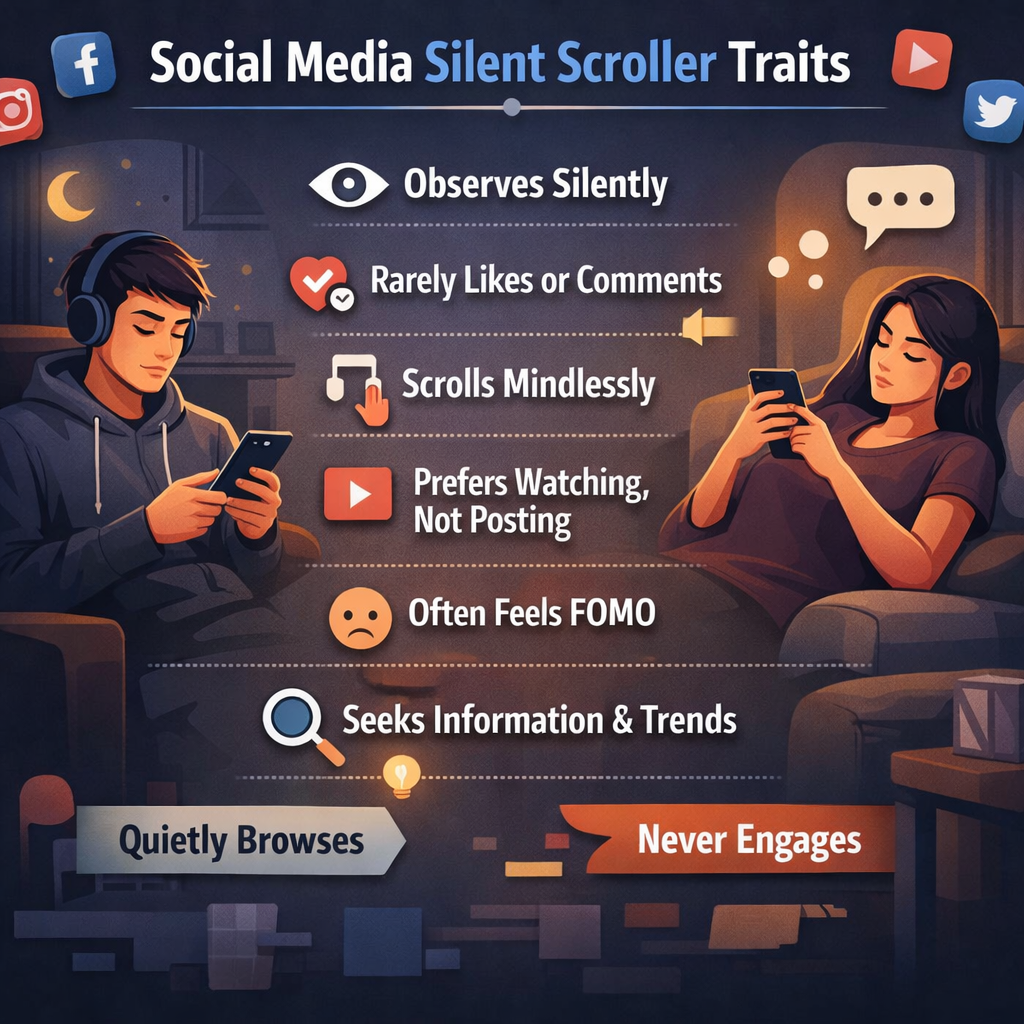
In the fast-moving world of social media, attention is often focused on influencers, creators, and outspoken users who constantly post, comment, and engage. Yet, beneath the noise exists a much larger group that rarely speaks up — the silent scrollers. These users consume content daily, observe trends, watch stories, and read comments, but almost never interact publicly. Understanding social media silent scroller traits is essential for marketers, content creators, and businesses that want to connect with the true majority of their audience.
Who Are Silent Scrollers?
Silent scrollers are individuals who actively browse social platforms without visibly engaging. They may spend hours watching videos, reading posts, or viewing profiles, yet leave no trace through likes, comments, or shares. Their silence does not indicate disinterest. In fact, many are deeply engaged mentally and emotionally — they simply choose private consumption over public interaction.
This behavior is common across platforms such as Facebook, Instagram, TikTok, X (Twitter), and LinkedIn. Studies of online communities have consistently shown that most users are “lurkers,” meaning they observe rather than participate. Silent scrollers represent this digital body language — present, attentive, but quiet.
Key Traits of Silent Scrollers
1. Preference for Privacy
One of the strongest characteristics of silent scrollers is a desire for privacy. They are cautious about their digital footprint and prefer not to reveal opinions, interests, or personal details publicly. Concerns about data security, online judgment, or unwanted attention often influence this behavior.
2. Fear of Judgment
Many users avoid interacting because social media can be a critical environment. Posting a comment or opinion exposes them to disagreement or negativity. Silent scrollers often think, “It’s safer to just watch.” This is especially true on controversial topics where discussions can escalate quickly.
3. Observational Learning
Silent scrollers are keen observers. They use social media as a tool to learn — about trends, products, lifestyles, news, or professional insights. Instead of asking questions publicly, they gather information quietly and form their own conclusions.
4. Selective Engagement
Although they appear inactive, silent scrollers do engage — just privately. They might send posts through direct messages, discuss content offline with friends, or save posts for later. Their interaction happens behind the scenes rather than in visible metrics.
5. Content Over Community
Active users often seek connection and recognition, while silent scrollers focus primarily on content consumption. They log in to be entertained, informed, or inspired — not necessarily to socialize.
6. Time-Efficient Browsing
Many silent scrollers treat social media like a news feed rather than a social space. They scroll quickly, absorb key information, and move on. Commenting or posting feels time-consuming compared to passive browsing.
Why Silent Scrollers Matter
For brands and creators, silent scrollers can be misleading. A post with few likes might still have reached thousands of viewers who chose not to engage publicly. This hidden audience influences brand awareness, purchasing decisions, and word-of-mouth recommendations.
Silent scrollers often:
- Buy products after researching silently
- Follow accounts for months before interacting
- Recommend content privately to others
- Become loyal customers without ever commenting
Ignoring them means overlooking a powerful segment of the audience.
Psychological Reasons Behind Silent Scrolling
Human behavior online mirrors offline personality traits. Introverted individuals, for example, may prefer observation to participation. Social anxiety can also play a role, as public interaction may feel stressful.
Additionally, decision fatigue contributes to silence. With endless content available, users may feel overwhelmed and choose passive consumption to avoid making choices about what to say or how to respond.
Another factor is the “spotlight effect” — the belief that others are paying close attention to what we do. Silent scrollers may worry their comments will be scrutinized, even when that is unlikely.
How Content Creators Can Reach Silent Scrollers
Understanding social media silent scroller traits allows creators to design content that resonates even without visible engagement.
1. Create Value-Driven Content
Educational, entertaining, or inspirational posts attract silent consumers because they do not require interaction to be meaningful.
2. Use Clear Messaging
Silent users often skim content. Clear headlines, captions, and visuals help them grasp the message quickly.
3. Encourage Low-Pressure Interaction
Polls, reaction buttons, or simple questions reduce the effort required to engage. Even then, many will still remain silent — but they will feel included.
4. Focus on Trust Building
Consistent, authentic content builds familiarity. Silent scrollers may eventually convert into active followers once trust is established.
5. Track Meaningful Metrics
Instead of relying only on likes and comments, analyze reach, impressions, watch time, and click-through rates. These reveal the presence of silent audiences.
The Positive Side of Silent Scrolling
While some view passive usage negatively, silent scrolling has benefits:
- It reduces online conflict and negativity
- Encourages thoughtful consumption
- Protects personal boundaries
- Allows users to explore interests freely
For many people, social media is a relaxation tool rather than a performance stage.
When Silence Turns Into Action
Interestingly, silent scrollers often take action outside the platform. They may:
- Visit a website
- Subscribe to a newsletter
- Purchase a product
- Apply for a job
- Adopt an idea or habit
Their journey happens quietly, but the impact is real. Businesses frequently discover that customers who never interacted online were long-time observers.
The Future of Silent Scrolling
As awareness of digital privacy grows, silent scrolling behavior is likely to increase. Features like disappearing stories, private browsing modes, and close-friends lists show that platforms recognize the demand for less public interaction.
Content strategies will continue shifting from chasing engagement numbers to understanding audience behavior more deeply. The success of a post will not only depend on visible reactions but also on invisible influence.
Conclusion
Social media silent scroller traits reveal a powerful truth: loud engagement does not equal real attention. The quiet majority shapes trends, drives purchases, and spreads ideas in subtle ways. They remind us that influence is not always measured by comments or likes.
For creators and brands, the key is to respect this silent audience — provide value, maintain authenticity, and understand that meaningful connections often happen without noise. In the end, silent scrollers are not disengaged users; they are thoughtful observers navigating the digital world on their own terms.
